Comprehensive Guide to Apartment Acceptance from the Developer
How to avoid costly mistakes and effectively detect defects with the Ailink Defect Description Generator
Your indispensable step-by-step guide – from documentation to practical on-site tips
Why is apartment acceptance so important?
Accepting an apartment from the developer is one of the most important and simultaneously stressful moments in the property purchase process. For most buyers, it's a situation they encounter once or twice in their lifetime. For the developer – it's everyday business. This asymmetry of knowledge and experience means the buyer is the weaker party if not properly prepared.
Key facts:
Technical acceptance is the formal moment where you verify whether the property was completed according to the developer contract, meets construction and technical standards, and is free of defects that could generate costs in the future. This is the last moment where you have real negotiating power.
Important warning!
Signing the protocol without remarks means you accept the apartment's condition. Any subsequent complaints will be much harder to enforce.
Ailink Defect Description Generator – Your Indispensable Assistant
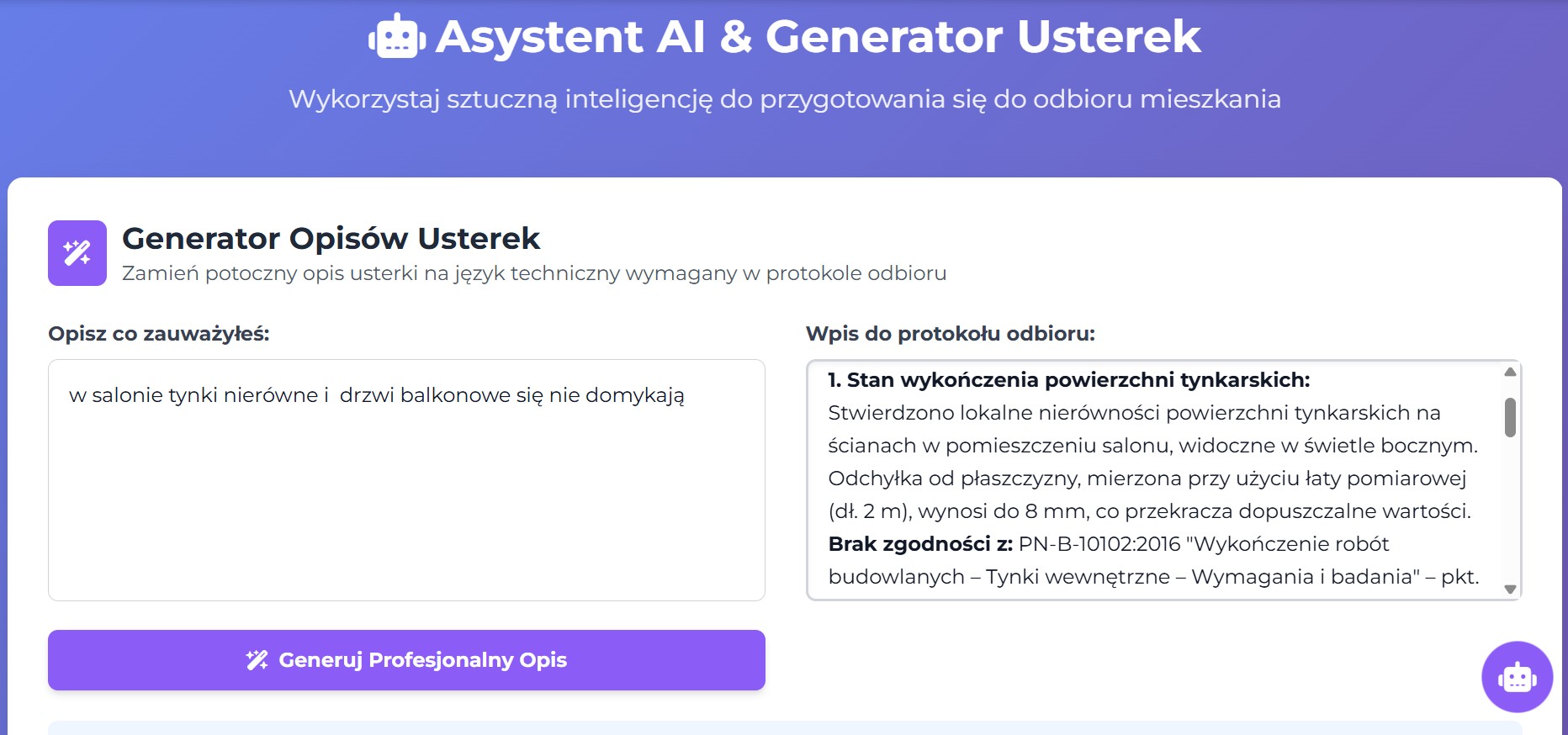
In today's world, where every detail matters, traditional methods of documenting defects during apartment acceptance may be insufficient. That's why we recommend the Ailink Defect Description Generator – a modern tool revolutionizing the technical acceptance process.
Why is the Ailink Generator a must-have?
- Precise description formulation – avoid unclear phrasing
- Automatic defect categorization by type and importance
- Photo integration – assign photographic documentation to each defect
- Generation of ready protocols in PDF format
- Database of common defects with examples and standards
- Legal support – descriptions compliant with legal requirements
Documentation – the foundation of effective acceptance

Documents you MUST have with you:
- Developer contract – basic reference document
- Information prospectus – technical and material details
- Finishing standard – exact specifications
- Property card – technical data of the apartment
- Apartment layout – room arrangement
- Area breakdown – square footage with centimeter accuracy
- Defect repair schedule (if previously established)
Why are documents crucial?
Because acceptance isn't about opinion, but about comparing the actual condition with the contract terms. If the contract says "straight and smooth walls" – a crooked wall is a defect. If you have a specified area – any deviation has financial significance.
When and how to schedule apartment acceptance?
Optimal acceptance conditions:
- Choose daytime – natural light is essential for defect detection
- Reserve at least 2-3 hours – rushing is the enemy of thoroughness
- Don't agree to be rushed – it's your time and your money
- Come rested and focused – fatigue causes oversights
Attention!
If acceptance lasts 15-20 minutes, it's not acceptance – it's a formality beneficial only to the developer. Real technical acceptance requires time and attention.
Do it yourself or with a specialist? The role of a building inspector
From a practitioner's perspective: self-acceptance = high risk. A professional inspector is an investment that pays off.
What does a professional inspector provide?
- Knowledge of standards (PN, WT) – knows what's acceptable and what's a defect
- Specialized tools – moisture detectors, thermal imaging cameras
- Detection of hidden defects – problems invisible to the naked eye
- Resistance to developer pressure – experience in negotiations
Cost analysis:
Inspector cost: 500-1000 PLN (depending on area)
Potential savings: tens of thousands of zloty on repairs
Value: peace of mind and certainty the apartment is in proper condition
Tools essential for technical acceptance
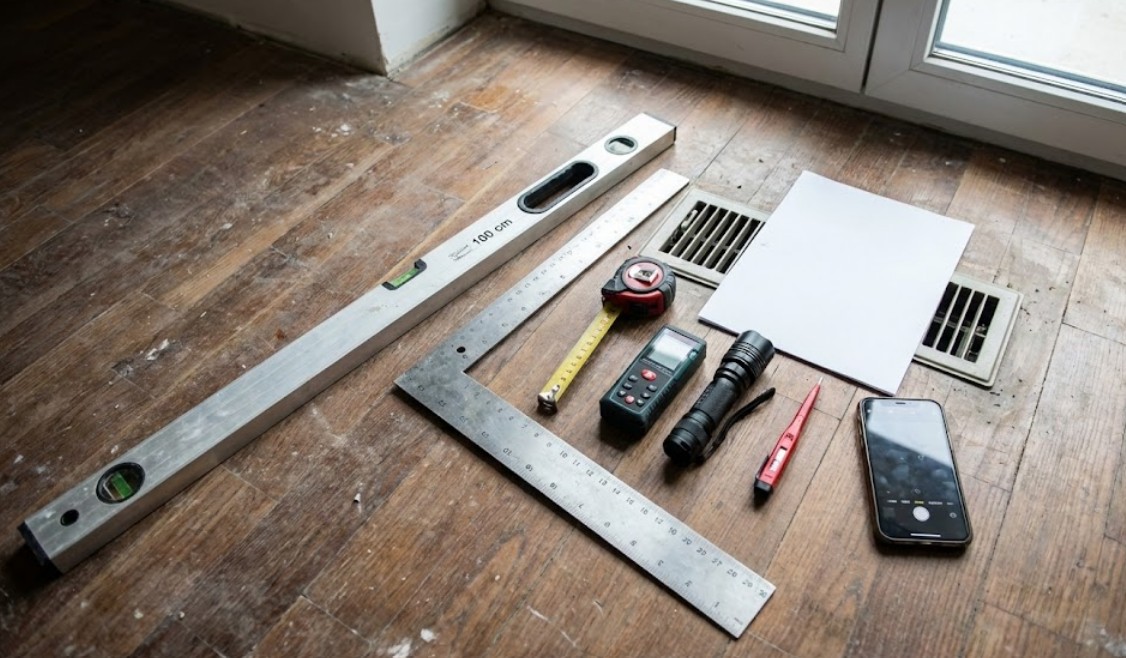
If you decide on acceptance without an inspector, the following tools are an absolute minimum:
Spirit level
Min. 100 cm, checks wall and floor evenness
Carpenter's square
For checking right angles
Laser distance meter
Precise area measurement
Flashlight
Illuminating hard-to-reach places
Voltage tester
Safe electrical installation checking
Sheet of paper
Ventilation function test
What exactly to check during apartment acceptance?
6.1 Walls and ceilings
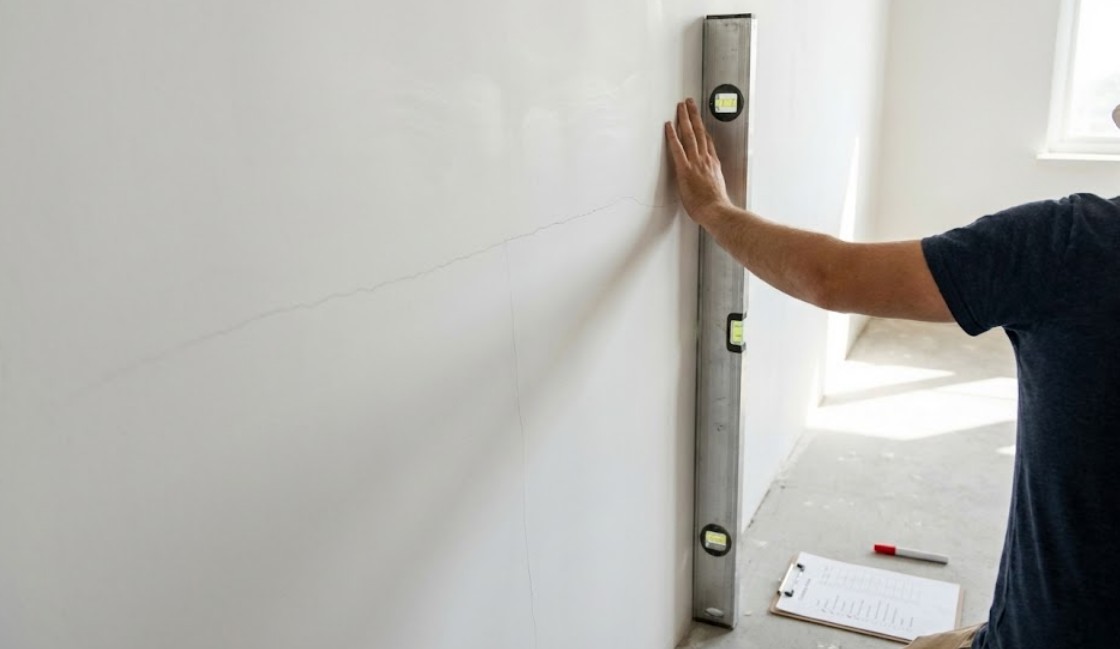
Check: plumb and level lines, cracks and fissures, waves and unevenness, wall-ceiling junctions.
❗ Important: Crooked walls = expensive finishing. Standards allow minimal deviations, but they must be within tolerance limits.
6.2 Floors and flooring
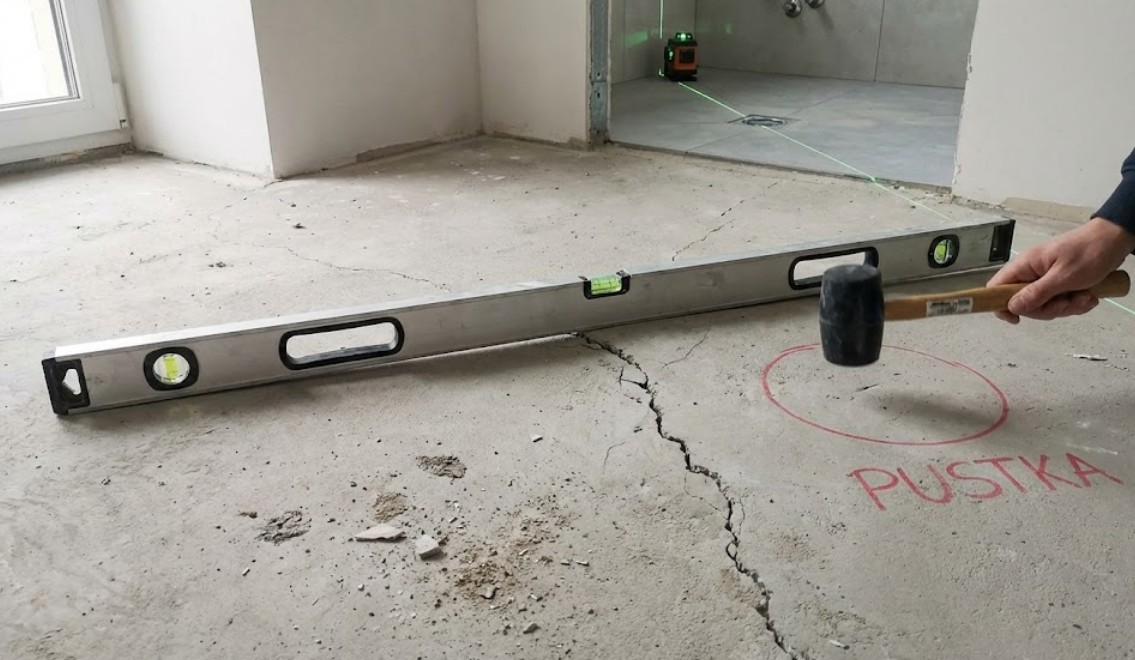
Check: screed evenness, cracks, voids (tapping with wooden mallet), slopes in bathroom and balcony.
This is one of the most common and expensive defects. Uneven floors cause problems with laying panels, tiles, and future use.
6.3 Windows and doors
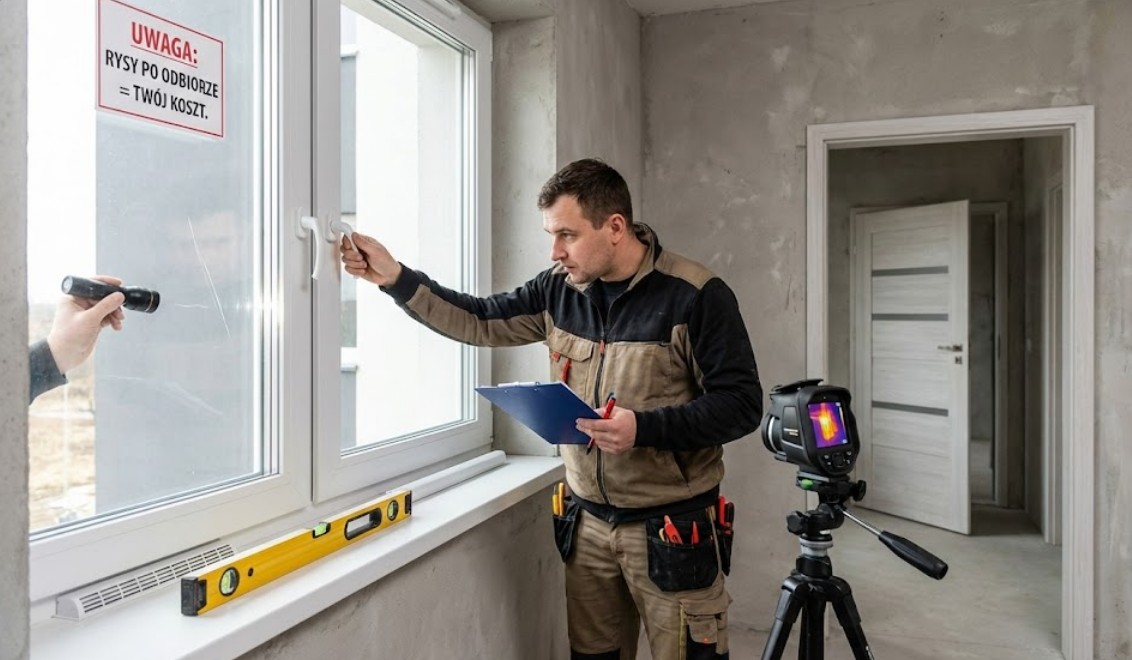
Check: opening and closing, airtightness (paper test), glass scratches, proper installation, air inlets.
❗ Remember: Damaged glass after acceptance = your problem. The developer may claim damage occurred after apartment handover.
6.4 Electrical installation
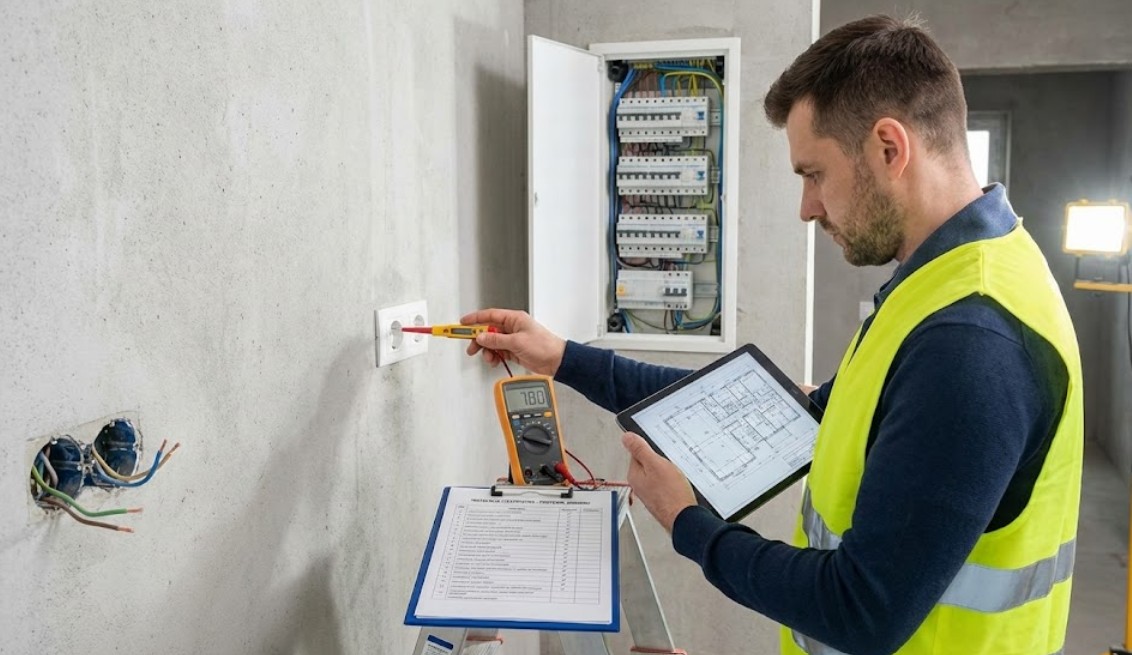
Check: number and placement of sockets, operation of each point, safety devices, compliance with design.
There's no room for compromise here – it's about your and your family's safety. Any electrical installation defect is a potential fire hazard.
6.5 Water and sewage installation
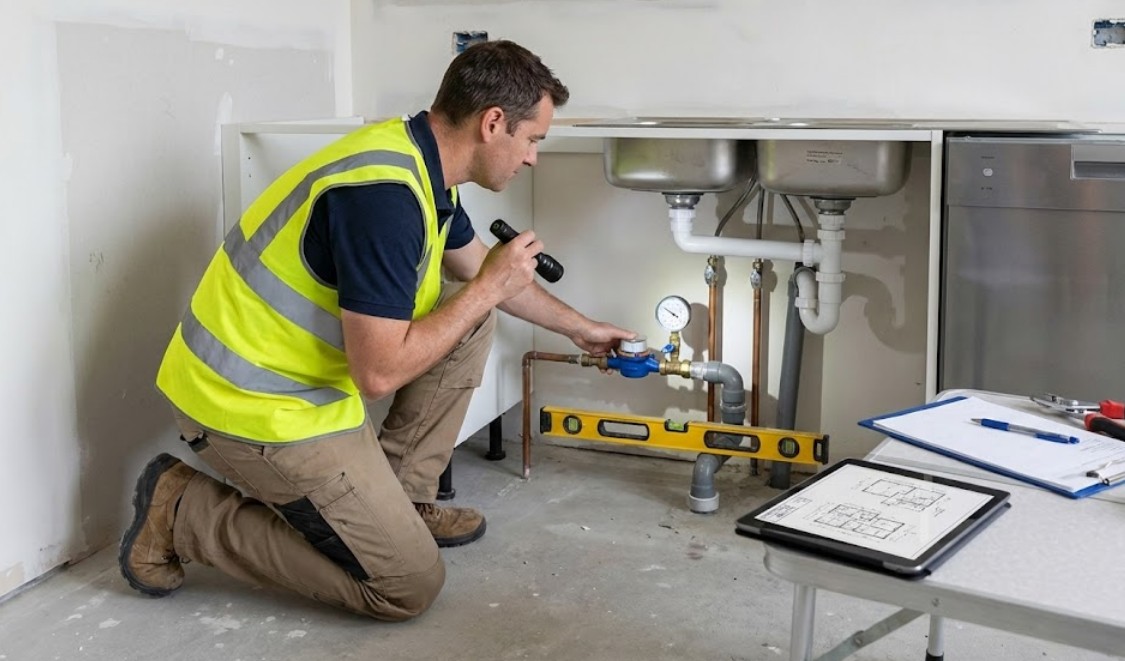
Check: water pressure, leaks (while filling sink and bathtub), drains, risers, appliance connections.
6.6 Ventilation
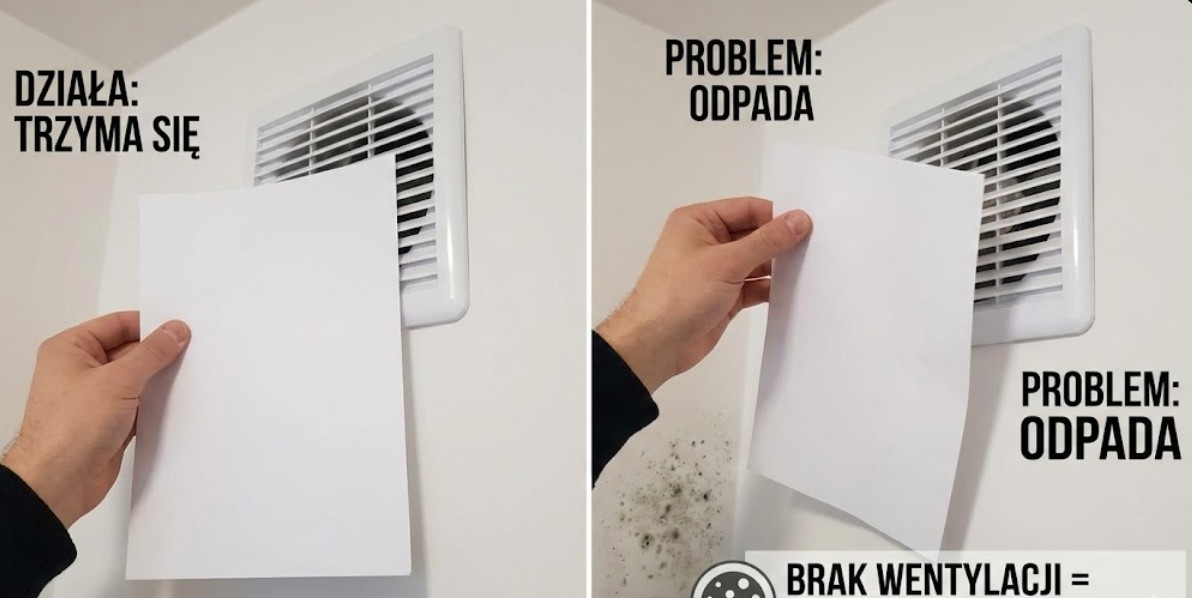
Simple paper test: hold a sheet of paper to the ventilation grill. If:
- it sticks to the grill → ventilation works properly
- it falls away → there are draft problems
No ventilation = moisture, mold, illness. One of the most underestimated yet crucial installations.
6.7 Balcony / terrace
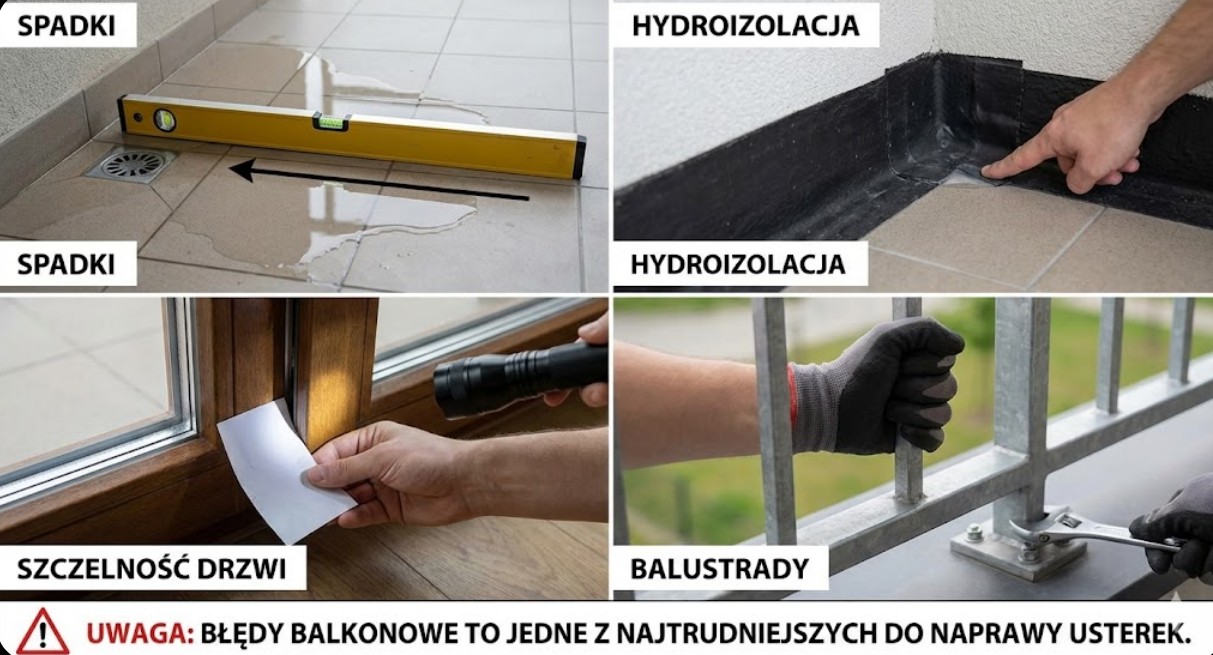
Check: slopes (should be 1.5-2% away from building), waterproofing, door airtightness, railings (height, stability).
Balcony errors are among the hardest to repair defects, often requiring comprehensive renovation work.
Material and immaterial defects – what does this mean in practice?
| Defect type | Examples | Your rights |
|---|---|---|
| Material defects | Lack of usability, safety hazard, non-compliance with contract, serious structural defects | You have the right to refuse acceptance, demand price reduction or withdraw from contract |
| Immaterial defects | Scratches, aesthetic imperfections, minor surface damage, slight deviations from standards | Go into the protocol, developer must fix them within specified timeframe |
Acceptance protocol – the most important document
Each defect in the protocol should be described according to the "5W" principle:
- WHAT – precise defect description
- WHERE – exact location (room, wall, height)
- HOW BIG – dimensions, problem scale
- PHOTO – photographic documentation
- WHEN – repair deadline (max 30 days)
Golden rule of acceptance
DON'T AGREE TO VERBAL PROMISES! Everything not in the protocol practically doesn't exist. Developers often propose "we'll fix it after signing" – that's a trap!
Deadlines and developer responsibility
According to Polish construction law and the Act on Protection of Purchaser Rights:
Key deadlines:
- 14 days – developer's response time to protocol
- 30 days – standard defect repair time (unless otherwise agreed)
- No response = defect acknowledged – developer's silence works in your favor
Remember, the timeframe starts from the day of protocol delivery. That's why confirming document receipt is so important (preferably with developer's signature and stamp).
Legal warranty – your protection after acceptance
Even after signing the notarial deed, you have powerful protection tools:
Your rights under legal warranty:
- 5-year warranty – for structural and serious defects
- Right to repair – developer must fix defects
- Right to price reduction – if defects affect apartment value
- Right to withdraw from contract – in case of material defects
Most common buyer mistakes
What NOT to do during acceptance:
- Rushing – "I only have an hour" is a recipe for disaster
- No specialist – saving 500 PLN may cost 50,000 PLN
- No documentation – acceptance "by eye" has no legal power
- Succumbing to developer pressure – "everyone signs like this" is manipulation
- "It'll be fine somehow" – hope doesn't replace precise protocol
How we can help – www.ailink.pl
If you want to go through apartment acceptance calmly and risk-free, it's worth using professional support. www.ailink.pl offers comprehensive solutions for buyers purchasing apartments from developers.
Ailink Defect Description Generator
Your indispensable tool during technical acceptance. Precise descriptions, automatic protocols, legal support – all in one place.
What do you gain using Ailink Generator?
- Time savings – ready templates and descriptions
- Professionalism – expert-level documents
- Legal safety – descriptions compliant with requirements
- Mental comfort – you know you haven't missed anything
Comprehensive Ailink services:
- Analysis of developer documentation – we'll find ambiguities before signing contract
- Technical acceptance support – our inspectors are experienced specialists
- Construction and technical consultations – we'll answer every question
- Real estate and investment advisory – we'll help choose the best investment
- Help in developer negotiations – we act on your side
Our philosophy:
We act exclusively on the buyer's side, without any connections to developers. Our goal is to ensure a safe and fair transaction for you. We believe an informed client is a satisfied client.
Summary – why apartment acceptance is crucial
Technical acceptance isn't a formality, but a strategic moment in the property purchase process. It's:
Key importance of acceptance:
- The only real chance for corrections – later complaints are harder
- Moment protecting your money – defects mean additional costs
- Decision impacting years – apartment is accepted once, mistakes last for years
- Investment in comfort and safety – yours and your family's
Remember!
Apartment is accepted once. Mistakes last for years. Don't let rushing or lack of preparation ruin the joy of a new apartment. Use professional support, prepare thoroughly, and go through acceptance as an informed, confident buyer.
The Ailink Defect Description Generator is not just a tool – it's your partner in the apartment acceptance process. With it, you gain certainty that every defect will be properly documented, and your protocol will have real negotiating power.